
Safe Sleep for Babies in India: A Calm Guide for New Parents
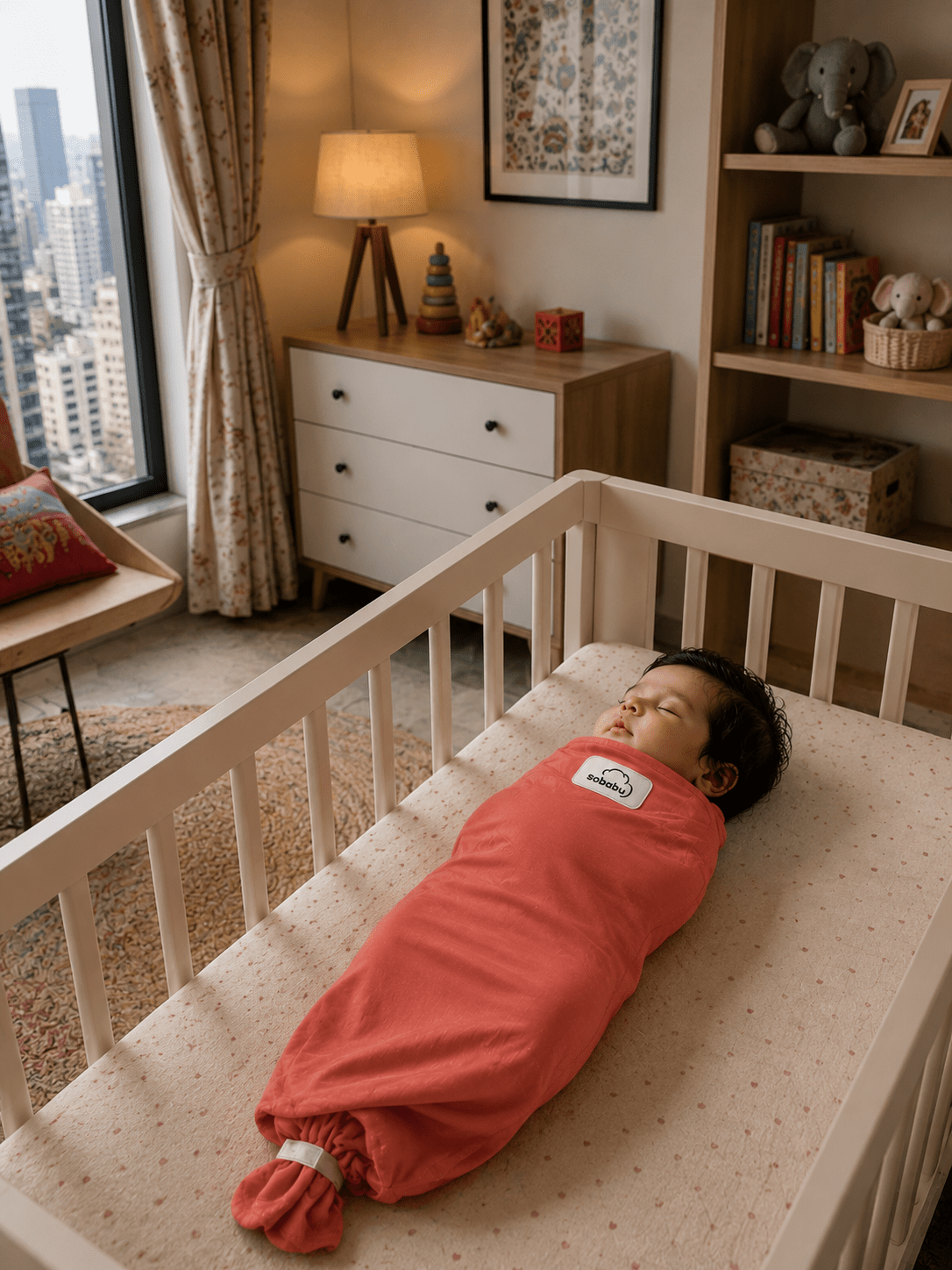
“Are you also waking up in the middle of the night to check your baby's sleep? Lying there, listening to every breath, wondering if the blanket is too heavy or if they're sleeping in the right position? That quiet worry ‘Am I doing this right?’ is what every new parent in India carries. But safe sleep for newborns is actually simple. And when you know the rules, you can finally rest with peace of mind.”
At Sobabu, we believe every baby deserves a calm, safe, and comfortable sleep environment, and every parent deserves peace of mind. This gentle, easy-to-follow guide will walk you through everything you need to know about safe sleep for newborns in the Indian context.
What Does Safe Sleep for Baby Mean?
Safe sleep for baby means creating a sleep environment that minimizes the risk of sleep-related infant deaths, including sudden infant death syndrome (SIDS), SUDI/SUID, accidental suffocation, and strangulation.
According to the American Academy of Pediatrics (AAP) and Indian pediatric guidelines, safe sleep for newborns follows the ABCs: https://www.rainbowhospitals.in/blog/is-your-baby-sleeping-safely-parents-guide
|
ABC Principle |
What It Means |
|
A – Alone |
Baby sleeps in their own space in the same room, not in your bed |
|
B – Back |
Baby always sleeps on their back, not on their side or tummy |
|
C – Crib |
Baby sleeps in a safety-approved crib or bassinet with a firm, flat mattress |
|
D – Don't Smoke |
Keep baby in a smoke-free environment |
Safe sleep for newborns also includes:
• Using a firm mattress with only a fitted sheet
• Keeping the crib bare (no pillows, blankets, bumpers, or soft toys)
• Dressing baby appropriately for room temperature (sleep sack or wearable blanket)
• Room-sharing without bed-sharing
Why Is Safe Sleep Necessary?
The Risks of Unsafe Sleep
Sleep-related infant deaths are preventable, yet they remain a serious concern:
|
Risk |
What Happens |
Prevention |
|
SIDS |
Unexplained death during sleep, highest in first 6 months |
Back sleeping, firm mattress |
|
Accidental Suffocation |
Baby's airway blocked by soft bedding, pillows, or adult body |
Bare crib, no bed-sharing |
|
Strangulation |
Baby's neck trapped between crib slats or bedding |
Safety-approved crib |
|
Overheating |
High room temperature or heavy blankets cause heat stress |
Dress appropriately, control temperature |
Statistics That Matter
• 1 in 1,000 births globally experience SIDS
• 60% of sleep-related incidents happen in the first 3 months
• Room-sharing decreases risk by up to 50% (but bed-sharing increases it)
• Back sleeping reduces SIDS risk by 50%
Why It Matters for Indian Parents
In India, many families practice:
· Co-sleeping/bed-sharing (traditional but risky)
· Using woven cradles (soft, uneven surfaces)
· Heavy swaddling with thick blankets (overheating risk)
· Pillows under baby's head (suffocation risk)
Understanding safe sleep for newborns helps you honor tradition while prioritizing safety.
When Does Safe Sleep Apply? (Age & Timeline)
Safe sleep isn't just for newborns, it applies throughout your baby's first year, but the risk levels change.
The first three months are the highest risk period. This is when you need to follow the ABCs strictly, avoid soft bedding completely, and practice back sleeping only.
From three to six months, the risk remains high. Continue the ABCs, and stop swaddling when your baby shows signs of rolling.
From six to nine months, the SIDS risk decreases, but you should still maintain a safe environment because your baby may start rolling.
From nine to twelve months, the risk is lower. You can introduce a small pillow after twelve months if your pediatrician approves.
After twelve months, the risk is minimal. You can transition to a toddler bed when your baby is ready while still avoiding loose bedding.
Here's the timeline you need to remember:
Start back sleeping from day one. Always place your baby on their back for every sleep.
Stop swaddling at two to three months when rolling begins. Transition to a sleep sack.
Sobabu’s transitional sleepsack helps make this change smoother, so you can move from swaddling to safer, arms-free sleep without needing multiple products.
Introduce a pillow after twelve months only if your pediatrician approves.
Transition to a toddler bed between eighteen and thirty-six months by following manufacturer guidelines.
Room-sharing can end after twelve months per parent preference, but continue safe sleep habits.
Safe sleep for newborns is most critical in the first six months, but safe habits should continue throughout the first year.
Your Step-by-Step Nightly Safe Sleep Routine
Here's how to create a calm, safe bedtime routine:
Thirty minutes before bed: Check the room temperature (20–22°C). Ensure the crib is bare with only a firm mattress and fitted sheet. Dim the lights and play soft white noise if desired.
Twenty minutes before bed: Give your baby a warm bath to help them relax. Optionally, do a gentle massage with organic baby oil.
Ten to fifteen minutes before bed: Breastfeed or bottle-feed your baby in a quiet, calm space. Keep your baby upright for ten minutes after feeding to prevent spit-up.
Five minutes before bed: Dress your baby for sleep. If your baby is under two to three months, use Sobabu swaddle wrap OR Sobabu Transitional Sleepsack. Swaddle snugly around the arms, leave the legs loose, and ensure the fabric is breathable. Avoid hats during sleep because they cause overheating.
If your baby is under two to three months: Swaddle them using a Sobabu’s breathable cotton swaddle wrap. Make sure it's not too tight around the chest or hips. Stop when your baby shows rolling signs at two to three months.
Place your baby on their back: Put them in the crib or bassinet on their back. Ensure their face is uncovered. Make sure your baby is drowsy but awake to help them learn self-soothing.
Create a calm atmosphere: Dim the lights completely. Turn on a white noise machine if desired. Say a gentle bedtime phrase like “goodnight, sweet baby.”
Monitor safely: Use a baby monitor if desired. Check periodically but avoid over-watching. Trust safe sleep practices.
In the morning: Greet your baby with soft light. Do a quick check for comfort. Begin the day with love.
Common Mistakes New Parents Make in India
Let's be honest, many of us make these mistakes without realizing the risk:
Bed-sharing with your baby. This is dangerous because adult bodies, pillows, and blankets can suffocate your baby. Instead, room-share with a crib or bassinet beside your bed.
Using a Jhoola or cradle. The soft, uneven surface increases SIDS risk. Instead, use a firm crib mattress.
Heavy swaddling with thick blankets. This causes overheating, which is a major SIDS risk. Instead, use a breathable Sobabu cotton swaddle that's lightweight and gentle.
Placing a pillow under your baby's head. This can block the airway and cause suffocation. Don't use a pillow until twelve months or older.
Sleeping your baby on a couch. This creates a high risk of suffocation between cushions. Always use a crib or bassinet.
Side or tummy sleeping. This increases SIDS by 50 percent or more. Always practice back sleeping.
Loose blankets in the crib. These can cover your baby's face and block breathing. Use a lightweight swaddle or wearable blanket instead.
Overdressing your baby. This causes overheating, which increases SIDS risk. Dress your baby for room temperature and use breathable swaddles.
Continuing swaddling after rolling. Your baby can trap their face in the swaddle. Stop at two to three months.
Delaying safe sleep education. The first three months are the highest risk period. Learn guidelines before your baby arrives.
In India, cultural mistakes are also common:
The belief that “your baby should sleep close to mom” leads to bed-sharing, which has suffocation risk. Instead, room-share with a crib or bassinet beside your bed.
The belief that “a thick swaddle keeps your baby warm” causes overheating, which equals SIDS risk. Instead, use a SoBaBu organic cotton swaddle that's lightweight and breathable.
The belief that “jhoola is traditional and safe” ignores that the soft surface equals SIDS risk. Instead, use a firm crib mattress.
The belief that “a pillow gives your baby a nice head shape” ignores that pillows cause suffocation risk. Don't use a pillow until twelve months.
It’s natural to feel that co-sleeping creates closeness. But bonding can happen beautifully during awake moments through cuddling, feeding, holding, and skin-to-skin time. For sleep, room-sharing without bed-sharing is the safer approach.
Heavy or non-breathable swaddling is another common mistake. Thick, synthetic swaddles trap heat and cause overheating. Instead, use Sobabu's bre athable organic cotton swaddles designed for safe, comfortable sleep.

At Sobabu, we specialize in creating gentle, safe swaddling solutions that help your baby sleep comfortably while following safe sleep for newborns guidelines.
We offer premium cotton swaddle wraps and Sobabu SkinSoft™ Transitional Sleepsack designed with safety and comfort at the forefront:
Sobabu Cotton Breathable Swaddle Wrap (available in bundles) – Perfect for Indian summers and year-round use. Made from 100% breathable organic cotton that prevents overheating while keeping your baby cozy.
Sobabu SkinSoft™ Transitional Sleepsack (available in bundles) – Made for the important stage between newborn and active sleepers. It gives your baby the comfort of a cozy sleep layer while supporting safer, arms-free back sleeping as they begin to roll.
Together, Sobabu swaddle wraps transitional sleep sacks and Classic Sleepsacks are designed around safe sleep principles:
• Made with soft, breathable fabrics to help reduce overheating
• Lightweight and comfortable for Indian weather conditions
• Designed to keep babies cozy without using loose blankets
• Swaddle wraps support snug arm swaddling during the early newborn stage
• Transitional sleep sacks support arms-free sleep when your baby starts rolling
• Both options are made to support back sleeping, the safest sleep position for newborns
• Thoughtfully designed for comfort, safety, and ease of use for parents
Final Thoughts: Peace of Mind with Safe Sleep for Newborns
As a new parent in India, you may receive advice from family, friends, and social media. But when it comes to safe sleep for newborns, trust evidence-based guidelines from pediatricians. Remember the ABCs: Alone, Back, Crib.
When it comes to swaddling, choose breathable, lightweight organic cotton swaddles like Sobabu's that support safe back sleeping without overheating.
By choosing a calm approach and safe swaddling solutions from SoBaBu, you're giving your baby the best start for healthy, protected sleep. Your peace of mind matters too, because when your baby sleeps safely, you rest worry-free.
Start your journey to safe sleep for newborns today with Sobabu's gentle, organic cotton swaddles designed for safe, comfortable sleep in Indian homes.
Sources & References
- WHO — Infant Sleep Safety
https://www.who.int/publications/i/item/WHO-FWC-MCA-16.02 - AAP — Safe Sleep Policy
https://publications.aap.org/pediatrics/article/150/1/e2022057990/188035 - NHS — Reducing the Risk of SIDS
https://www.nhs.uk/conditions/baby/caring-for-a-newborn/reducing-the-risk-of-sids/ - CDC — Infant Sleep-Related Risks
https://www.cdc.gov/sids/about/index.html
Key Takeaways
Practical Checklist
-
Key takeaway or action step.
-
Key takeaway or action step.
-
Key takeaway or action step.
Recommended For This Topic
View ProductYour Sleep Journey
Not Sure What Your Baby Needs?
Head back to our Sleep Journey pages to find the right product and support for your baby's current stage.